
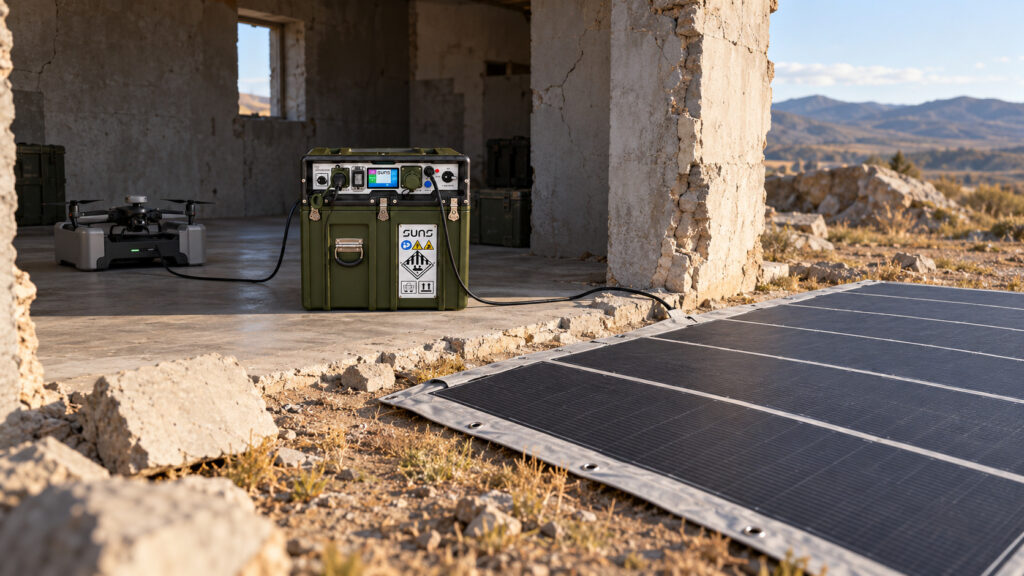
On today’s battlefield, a drone is only as useful as its next charged battery. NATO’s 2026 lessons-learned report on tactical energy in Ukraine notes that a typical quadcopter battery lasts 25–35 minutes in the air and takes 60–90 minutes to recharge. A single drone team can cycle through 10–12 charges a day.
That turns every drone position into a small power plant. Most units still rely on generators, and the same report warns that generators “create noise and thermal signatures that can be detected by Russian drones.”
SUNS changes that. The Energy Hub stores solar power from the Fast Fold mat and charges drones and docking stations without noise, exhaust or a heat plume. Teams can set up inside cover, keep the mat in the sun and keep flying, without a generator to give the position away.